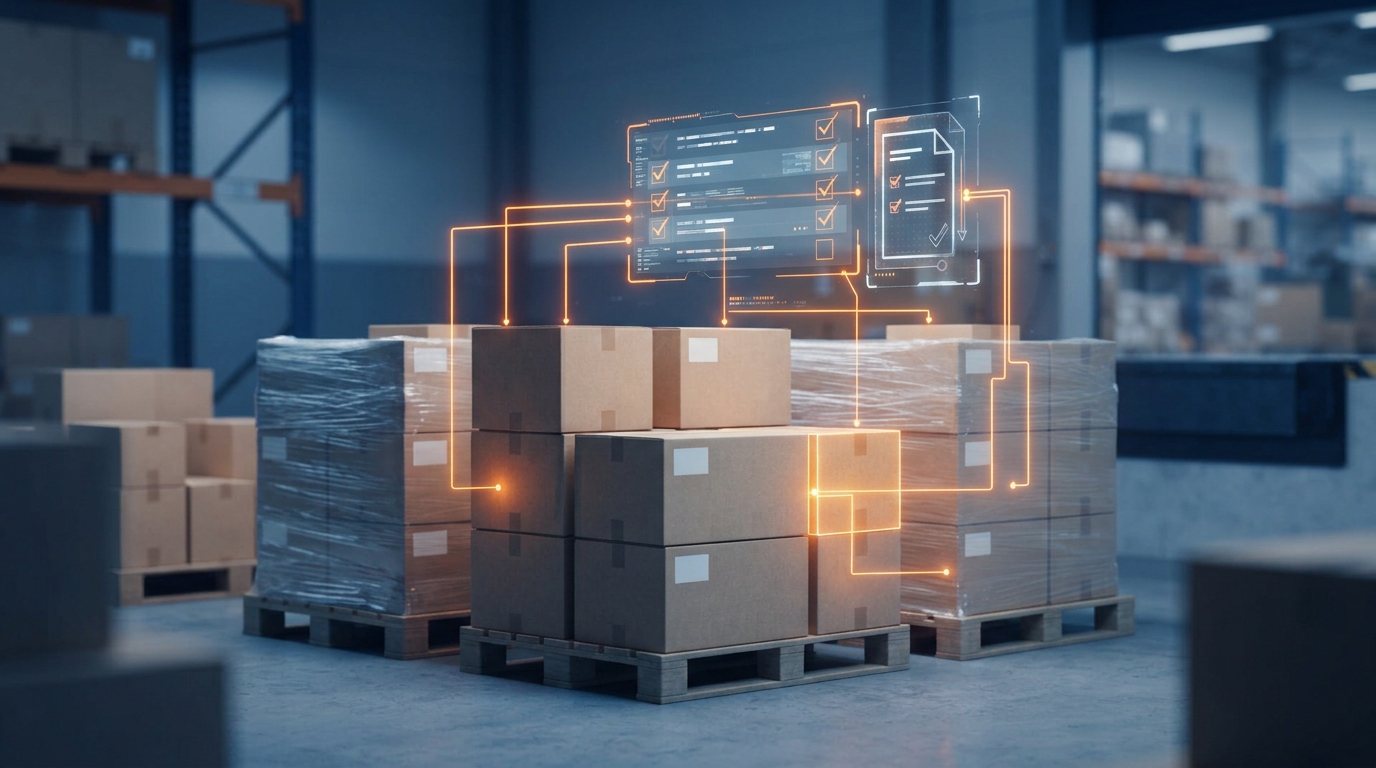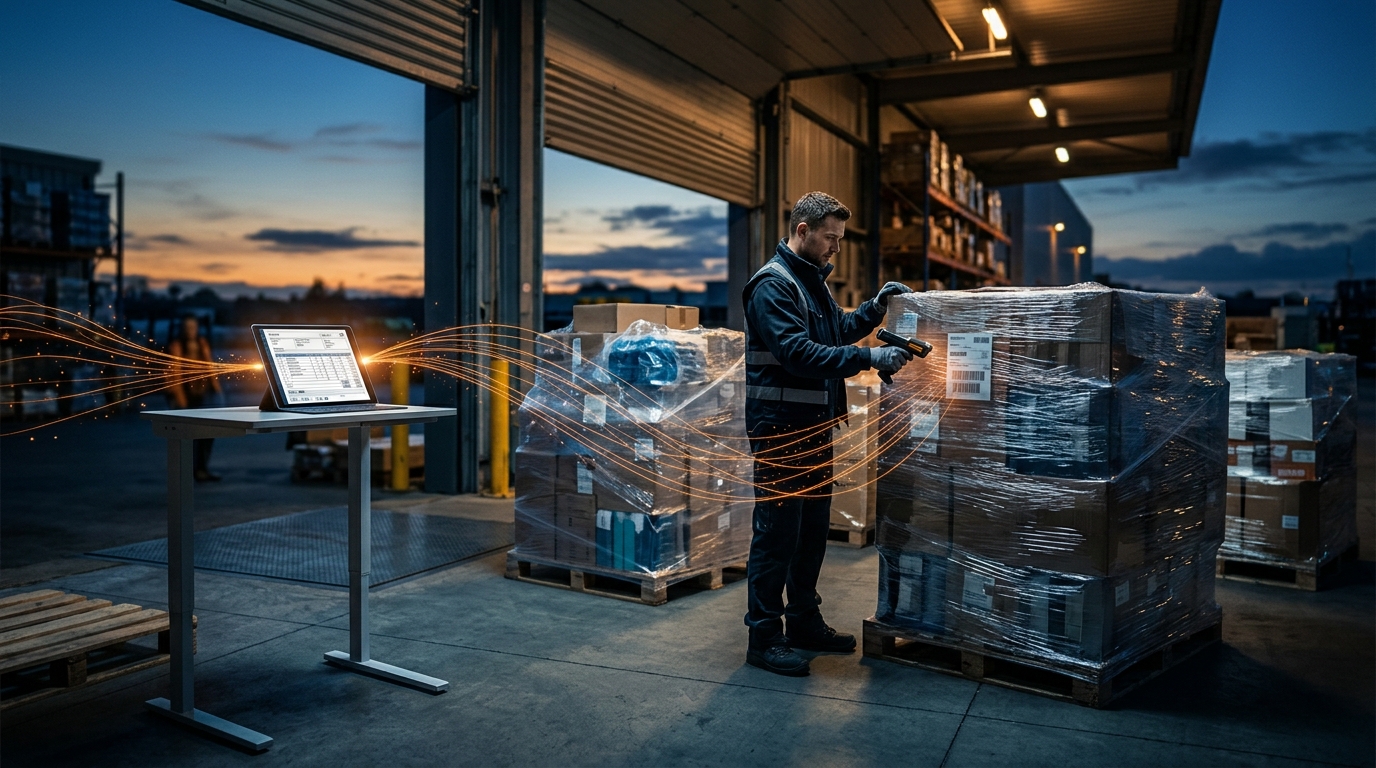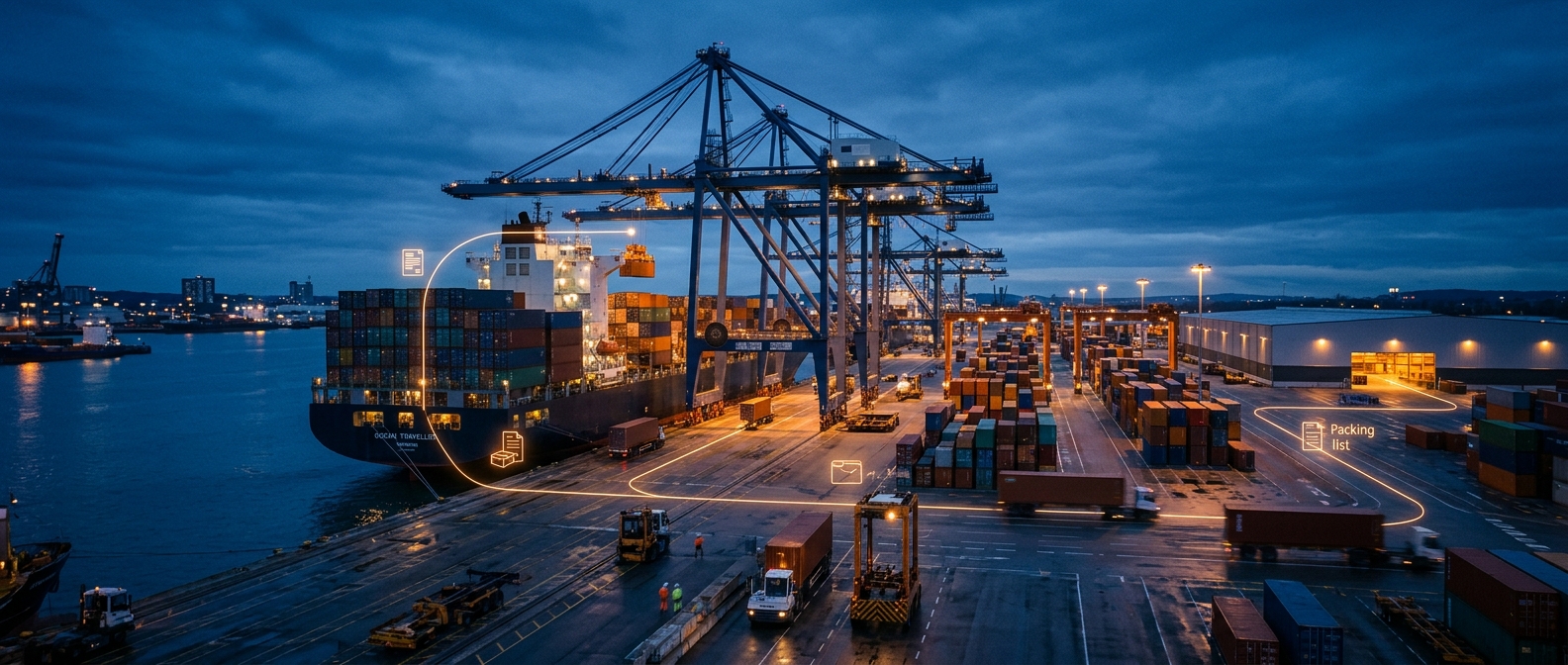

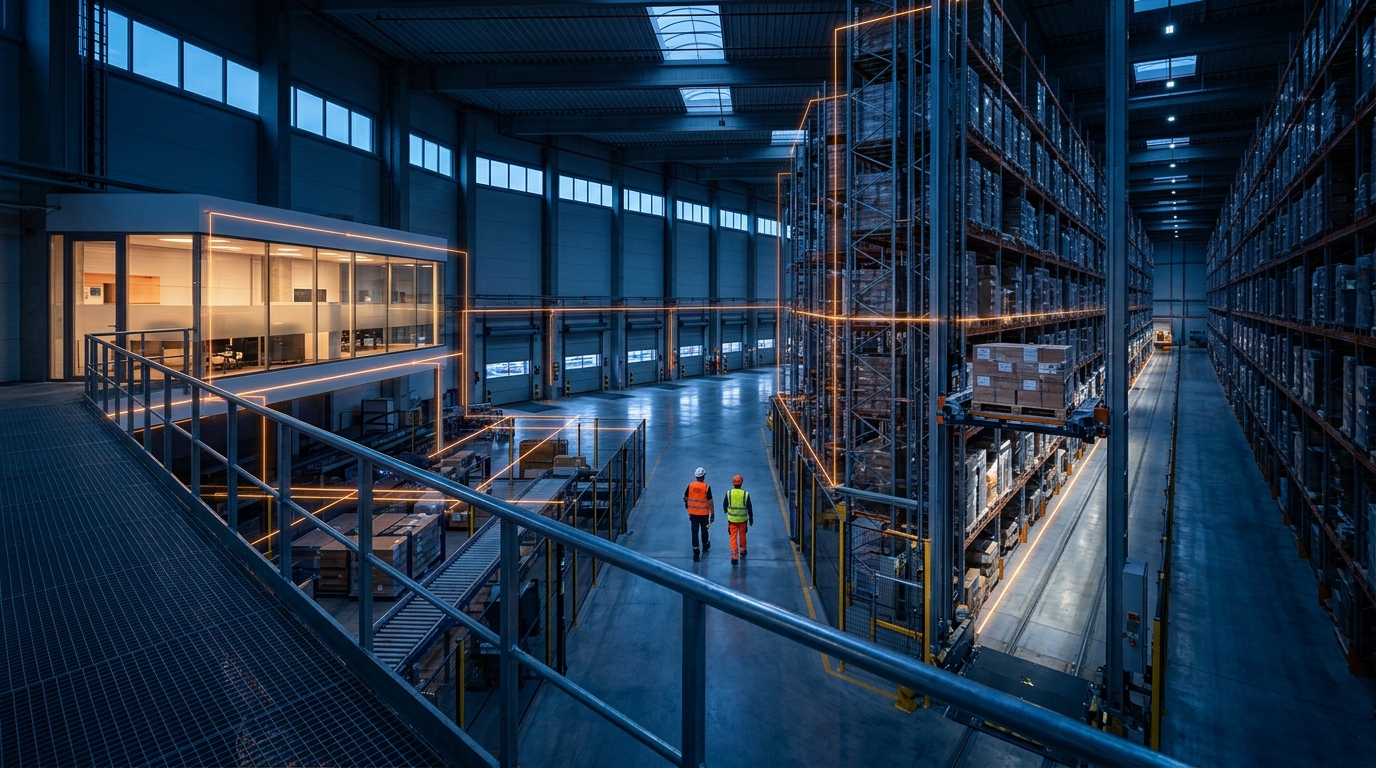
What a logistics operator is, what it does, the types from 1PL to 5PL and how it differs from a freight forwarder. Plus the part nobody sees: the data behind each shipment.
When a company decides that moving, storing and distributing its goods is not its core business, the next step is usually to look for a logistics operator. It hands over part of its supply chain and, in return, gains capacity, reach and flexibility without buying trucks or leasing warehouses. What rarely gets mentioned is that, along with the goods, it also outsources a constant stream of documents and data that someone has to read, check and reconcile.
This guide explains what a logistics operator is, what it does, the different types (from 1PL to 5PL) and how it differs from a freight forwarder or a customs broker. It also covers the part that never makes it into the brochure: how the information behind each shipment is handled, and what to ask for, or have sorted, on that front.
A logistics operator is a company that designs and runs some or all of another company’s logistics processes: transport, warehousing, order fulfilment, distribution and, in many cases, customs. Its clients can be manufacturers, distributors, ecommerce businesses or importers that would rather focus on making and selling.
The difference from a pure transport company is scope. A carrier moves goods from A to B; a logistics operator coordinates a chain of activities and is accountable for the overall result, with lead times, service levels and costs agreed in a contract. It may use its own assets (warehouses, fleet, staff) or subcontract part of them, but the client deals with a single point of contact.
It is worth separating this from the other meaning of the term. In job ads, “logistics operator” often refers to a warehouse operative who picks orders or drives a forklift. Here we are talking about the company, not the job.
The service catalogue varies a lot from one operator to another, but most combine several of these functions:
That last function is the least visible and, increasingly, the one that makes the difference. An operator that moves goods well but takes weeks to invoice, or cannot say where an order is, creates extra work for its client.
The industry uses the “PL” (party logistics) scale to describe how much logistics is outsourced and to whom. It is a rough classification, not a legal category, and these are its levels:
The most common model is 3PL, and it is what most companies have in mind when they talk about “hiring a logistics operator”. We cover it in detail in our guide to what 3PL means.
The three roles overlap in day-to-day work, and many companies combine several under one roof, but they are not the same thing.
The logistics operator focuses on ongoing physical execution: it stores, prepares and distributes its clients’ goods, usually under long-term contracts. The freight forwarder organises the door-to-door international transport of each shipment: it books space with shipping lines and airlines, coordinates everyone involved and handles the transport paperwork. The customs broker, or customs representative, files declarations with customs on behalf of the importer or exporter.
In practice, many logistics operators have a forwarding division and a customs department, and many forwarders offer warehousing. So rather than the label, what matters is knowing which part of the process each one takes on, and who is responsible for each document.
The reasons for working with a logistics operator tend to be the same in every sector. The company turns fixed costs (warehouses, fleet, staff) into variable ones, gains capacity for demand peaks and taps into a transport network and expertise that would take years to build. It also gets rid of the day-to-day management of incidents, inventory and suppliers.
The main risk is losing visibility. Once the goods leave your own warehouse, information about them depends on the operator’s systems, and it does not always arrive in the format or at the time you need it. It is common for an importer to get shipment updates by email, inventory in a weekly spreadsheet and invoices as PDFs at the end of the month, and for someone on the team to cross-check everything by hand to find out what happened to each order and what it really cost.
Every shipment a logistics operator handles produces a trail of documents: loading orders, delivery notes, transport documents (CMR, bill of lading or air waybill), customs declarations, certificates and, at the end, invoices. Some come from clients, some from carriers and shipping lines, and some are issued by the operator itself. Almost never in the same format.
That volume of paperwork is the real bottleneck for many operators. The operations team types the details of every PDF loading order into the TMS, accounts reconciles subcontractor invoices against agreed rates and, when a client asks, someone digs through the inbox for the signed delivery note.
Regulation is pushing in the same direction. Under the EU regulation on electronic freight transport information (eFTI), authorities in every Member State must accept that information electronically, through certified platforms, from 9 July 2027, according to the European Commission. Companies whose data is already digital and structured will reach that date well ahead.
A logistics operator in Valencia serves around twenty importers: it receives containers at the port, stores the goods and distributes them across Spain. It handles about 400 files a month, and for each one it receives, on average, a client order, the bill of lading, the commercial invoice, the packing list and between three and five invoices from the shipping line, the terminal and hauliers.
In a manual process, two people in operations spend much of the morning copying order and bill of lading details into the TMS, and someone in accounts checks every supplier invoice against the agreed rate before re-invoicing the client. Errors surface weeks later, when an importer disputes a surcharge it should not have paid, or a difference in package count that nobody spotted when the goods arrived.
With documents read automatically, every PDF is classified on arrival, its data is matched against the client order and the TMS receives fields that are already validated. Supplier invoices are reconciled against rates automatically and only the mismatches go to a person. The importer, for its part, gets complete information on each file, on time.
94% of invoices processed automatically at Kaiona clients.
Price and geographic coverage are the starting point, but a relationship with an operator lasts for years, so it is worth looking at how it handles information too. These criteria help compare proposals:
For operators themselves, the list works the other way round: these are the arguments that weigh most when a client compares providers, and almost all of them depend on having clean, well-organised data.
Neither the operator nor its client needs to replace their ERP or TMS to fix the document side. It is enough for the data in each document to be entered once and reach the existing systems clean. Reading orders, bills of lading, CMRs and invoices automatically (K-Scan), grouping them by file with their checks (K-Flow) and connecting them to the ERP or TMS without retyping (K-Plug) covers most of that ground. We look at the wider context, with tighter margins and clients demanding more visibility, in our summary of the Accenture report on freight forwarding.
Whether you run a logistics operator or work with one, Kaiona can help you measure how much time goes into transcribing and reconciling documents, and how much of it can be automated within weeks, without migrating systems.
A company that manages some or all of another company’s logistics: transport, warehousing, order fulfilment, distribution and often customs. It coordinates those activities and is accountable to its client for the result, with agreed lead times and costs.
A logistics operator focuses on ongoing physical execution (storing, preparing and distributing goods), while a freight forwarder organises the door-to-door international transport of each shipment and its paperwork. Many companies offer both services.
A logistics operator that takes on several integrated activities for its client, such as warehousing, order fulfilment and transport, and runs them as a single service. It is the most common model of logistics outsourcing.
A 3PL carries out operations with its own or subcontracted resources. A 4PL manages and coordinates the whole supply chain, including other logistics providers, and usually has no warehouses or fleet of its own.
No, Kaiona is not a traditional SaaS. We don't sell you a generic platform that you have to adapt to, nor a monthly user license for your team to do the work.
Kaiona functions as a custom artificial intelligence and automation layer that connects directly with your current systems (ERPs, CRMs, document management). We handle the technical complexity so that you only see the results within your usual workflow.